


Dropping calls in the middle of a business deal, watching payment terminals time out in a retail store, or struggling with sluggish 4G data inside a modern building are frustrating realities across South Africa. When faced with poor signal, many home and business owners fall into a common trap: buying a cheap passive antenna online and expecting a miracle.
Months later, the signal remains terrible, voice calls drop constantly, and data speeds stall.
Buying a standalone passive antenna alone will never solve indoor cell phone signal problems. Understanding the crucial differences between passive outdoor antennas, satellite internet, and a true ICASA-approved cell phone signal booster system is essential to fixing cellular coverage in South African homes and commercial spaces permanently.
The Great Misconception: Antenna Alone vs. True Cell Phone Signal Booster
To understand why cheap antennas fail, you must understand how cellular signals behave and what an antenna actually does.
+——————+ +———————+ +——————-+
| Donor Antenna | ——> | Amplifier (Booster) | ——> | Indoor Antenna |
| (Captures Signal)| Cable | (Multiplies Power) | Cable | (Re-broadcasts) |
+——————+ +———————+ +——————-+
What a Passive Antenna Does (and Doesn’t Do)
A passive antenna (such as a Yagi or log-periodic outdoor antenna) is simply a passive directional tool. It acts like a funnel:
- What it can do: It can point toward a cellular tower and direct a line-of-sight signal into a cable.
- What it CANNOT do: It cannot amplify signal strength. It contains zero powered electronics, zero active gain processing, and no internal power source.
If the signal reaching your roof is weak (say, -100 dBm), a passive antenna only delivers that same weak signal—minus line loss across the coaxial cable—to your device. By the time the signal travels down 10 meters of cable into your living room or boardroom, the signal is actually weaker than it was on the roof.
How a Real Cell Phone Signal Booster Works
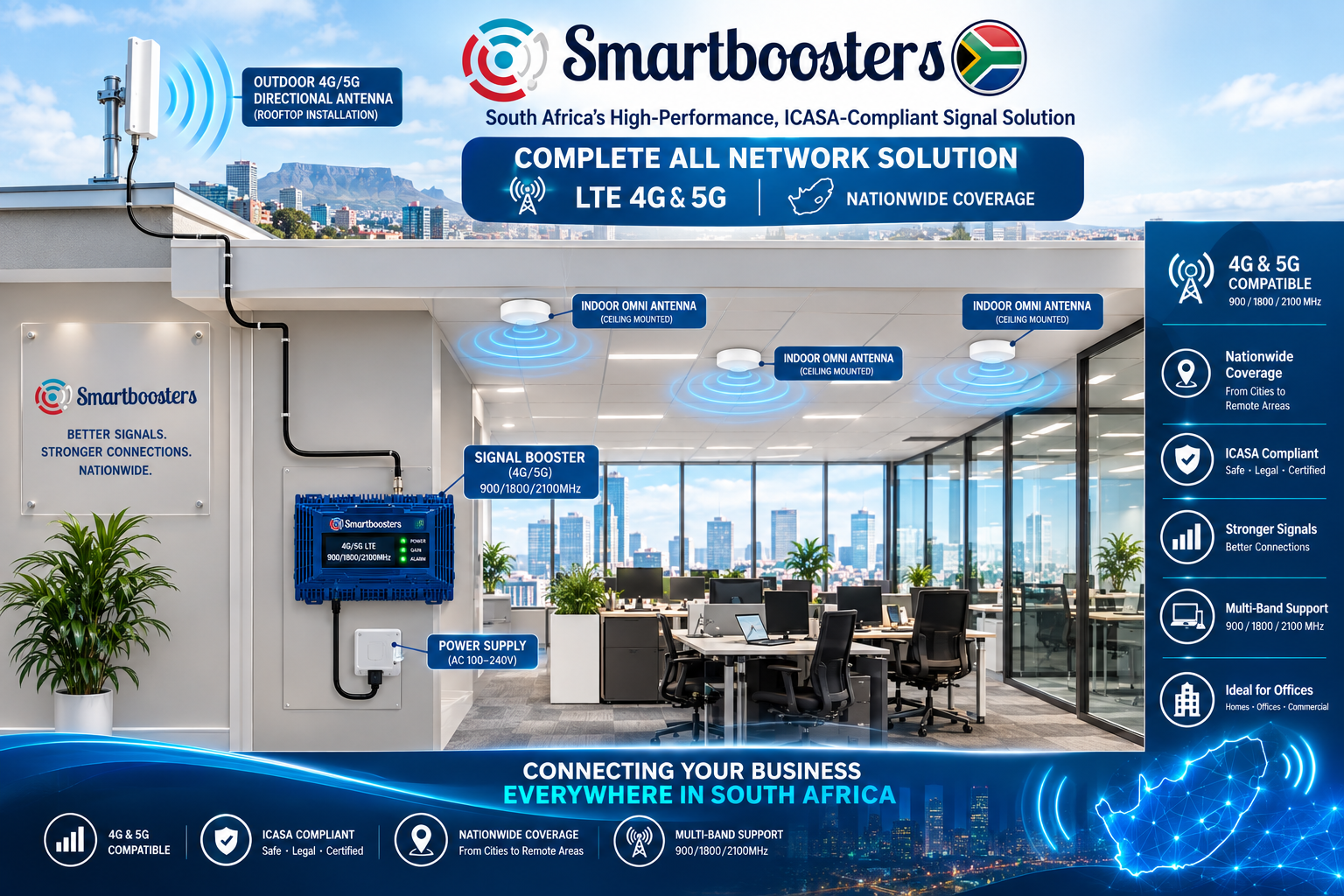
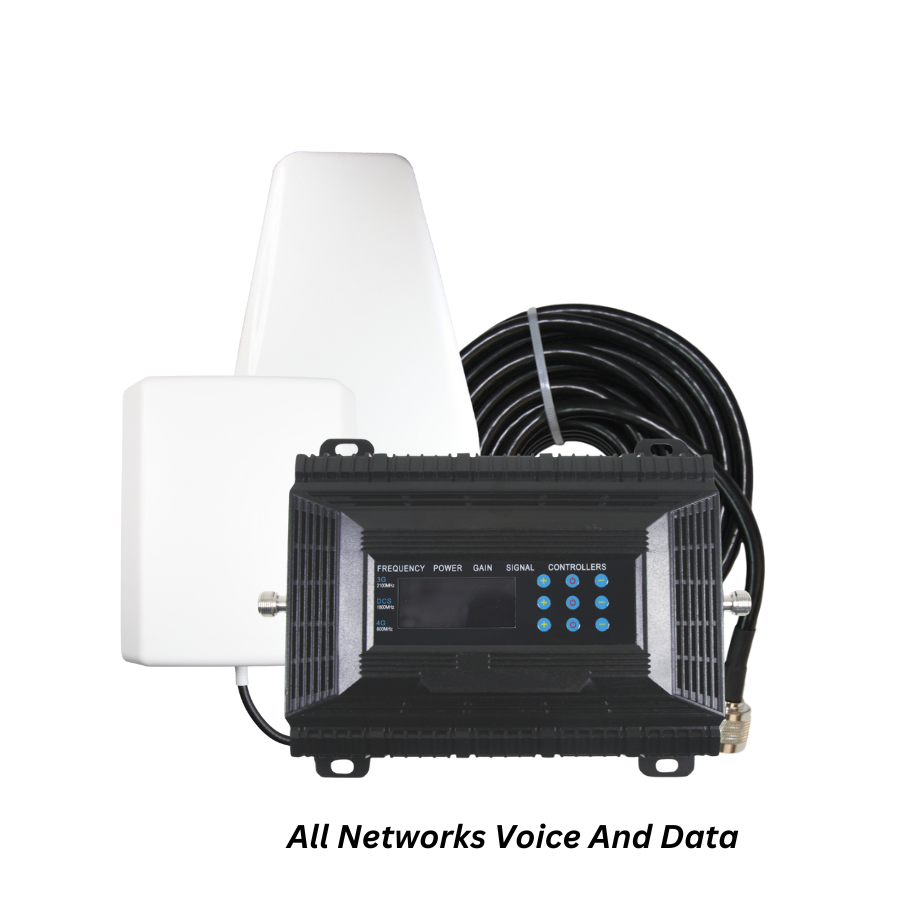
A genuine bi-directional cell phone signal booster system consists of three distinct components working in harmony:
- Exterior Donor Antenna: Mounted outside to capture existing 2G, 3G, 4G LTE, or 5G frequency bands from nearby Vodacom, MTN, Telkom, or Cell C towers.
- Active Bi-Directional Amplifier: A mains-powered unit containing active solid-state circuitry. It takes the weak exterior signal and amplifies it up to 70 dB or more (multiplying signal strength exponentially).
- Internal Broadcast Antenna: Distributes the newly amplified, high-gain signal throughout the interior of your property, penetrating concrete, brick, tinted glass, and steel structures.
When your mobile phone responds, the process reverses: the indoor antenna receives your phone’s low-power uplink signal, the bi-directional booster amplifies it, and the exterior donor antenna beams it back to the carrier tower. A standalone antenna simply cannot perform this dual-amplification process.
Don’t Confuse Satellite Internet with Cellular Signal Boosters
Another widespread misunderstanding in South Africa is confusing satellite connectivity with a cellular signal booster. While both use outdoor equipment, their purpose, technology, and monthly operational costs are completely different.
| Feature | Cellular Signal Booster | Satellite Internet |
| Primary Function | Amplifies local Vodacom, MTN, Telkom, & Cell C mobile signals | Connects directly to orbital satellites in space |
| Target Devices | Mobile phones, voice calls, SMS, LTE routers, speedpoint POS terminals | Dedicated satellite modem/router only |
| Mobile Voice Calls | Yes (restores seamless voice calls & SMS directly on your phone) | No (data only; requires Wi-Fi calling apps) |
| Monthly Subscriptions | R0 (One-time hardware purchase, no monthly fees) | High monthly recurring subscription fees |
| Latency / Lag | Microsecond transmission (ideal for real-time applications) | High latency (varies by satellite constellation) |
| Power Requirements | Ultra-low power consumption (runs seamlessly on backup/UPS) | Higher power draw for dish alignment and heating |
If your primary goal is to make clear cellular phone calls, eliminate dropped calls on your mobile numbers, and maintain high-speed 4G/5G data on smartphones and cellular routers without paying extra monthly subscriptions, a cell phone signal booster is the correct technology. Satellite internet cannot amplify your mobile network.
Why Cheap Antennas Fail in South African Conditions
South Africa presents unique telecommunications challenges. Cheap, unbranded antennas bought online fail for specific technical reasons:
1. High Coaxial Cable Signal Loss
Cheap antenna kits use low-grade RG58 or RG6 coaxial cabling. At cellular frequencies (1800 MHz to 2100 MHz), thin RG58 cables lose up to 3 dB to 6 dB of signal strength for every 10 meters. If a cheap passive antenna picks up 3 dB of passive directional gain on the roof, that gain is completely erased by cable loss before reaching your desk. Professional cell signal booster systems use low-loss LMR400 coaxial cabling coupled with active power amplifiers to bypass cable degradation entirely.
2. Building Materials Block Signal
Modern South African residential and commercial properties are built with reinforced concrete, steel beams, brick walls, and energy-efficient Low-E glass windows. These materials reflect and attenuate radio frequency signals by as much as 20 dB to 40 dB. A passive antenna running a wire through a window cannot generate enough power to overcome building attenuation. An active cellular amplifier delivers the decibels needed to penetrate interior walls.
3. Tower Distance and Topography
Whether in peri-urban areas around Gauteng, farmsteads in the Free State, or mountainous valleys in the Western Cape, distance from carrier towers creates severe attenuation. Passive antennas only concentrate light directivity; they cannot boost the power output required for your phone to signal back across 15 kilometers to an MTN or Vodacom tower. Real signal boosters feature UpLink Gain Control, actively boosting your phone’s outgoing signal so the tower can hear it clearly.
The Hidden Costs of Cheap Signal Solutions
Attempting to fix poor cellular reception on the cheap usually ends up costing far more in lost productivity and wasted equipment investments:
“Buying a R500 passive antenna to fix indoor cell signal is like attaching a larger funnel to a dry water pipe. Without water pressure (amplification), the extra funnel does nothing.”
- Wasted Capital: Buying passive antennas, extension cables, and cheap inline connectors leads to non-refundable expenses when signal performance remains unchanged.
- Operational Downtime: For business owners, bad signal means failed card payment transactions (POS speedpoints), missed client phone calls, and stalled WhatsApp business orders.
- Excessive Mobile Battery Drain: When a smartphone receives low signal (-110 dBm or worse), its internal transmitter operates at maximum power to search for a tower. This drains phone battery life in hours and causes devices to overheat.
- Illegal Boosters & Network Interference: Buying cheap, uncertified active amplifiers from untrusted sources risks importing illegal wideband repeaters. Unregulated repeaters cause noise feedback loop oscillation, destroying local cell tower signals and exposing operators to heavy fines from ICASA (Independent Communications Authority of South Africa).
The SmartBoosters Solution: Certified High-Performance Signal Amplification
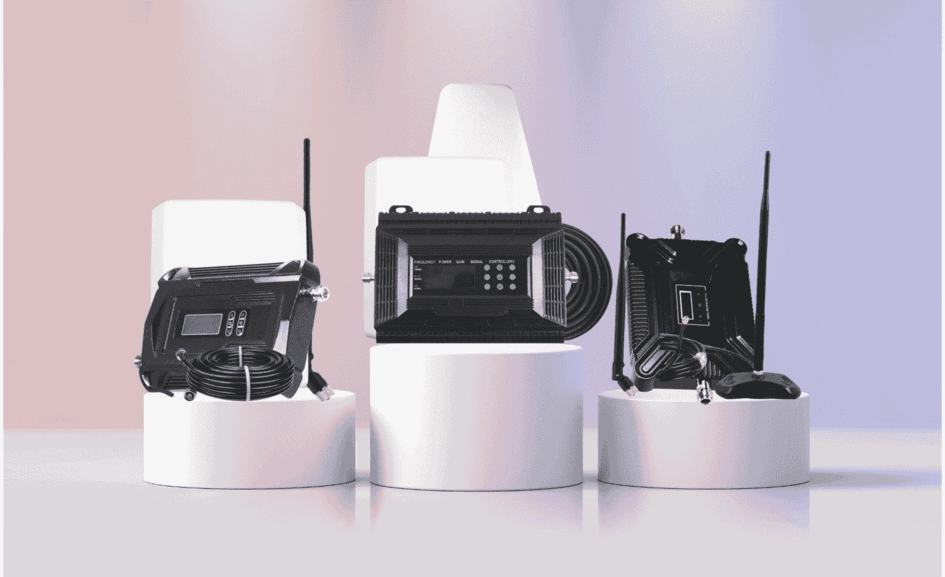
At SmartBoosters South Africa, we provide engineered, ICASA-compliant cell phone signal booster kits designed specifically for South Africa’s cellular frequencies and infrastructure.
+———————————————————————————+
| SMARTBOOSTERS SYSTEM ADVANTAGE |
+————————————+——————————————–+
| Single & Multi-Band Coverage | Boosts Vodacom, MTN, Telkom, & Cell C |
| Dynamic Gain Control (AGC) | Auto-adjusts power to prevent oscillation |
| Complete Hardware Kits | Donor antenna, booster, cables, & indoor dome|
| Commercial & Residential Scaling | Kits engineered from 100m² up to 5000m² |
+————————————+——————————————–+
1. Multi-Carrier Compatibility
SmartBoosters systems support all major South African network operators—Vodacom, MTN, Telkom, and Cell C. Whether you need to amplify voice frequencies (EGSM 900 MHz), 3G data (2100 MHz), or high-speed 4G LTE/5G bands (1800 MHz / 2600 MHz), our solutions cover multi-frequency spectrums simultaneously.
2. Intelligent Automatic Gain Control (AGC)
SmartBoosters amplifiers feature dynamic Automatic Gain Control. The booster continuously monitors incoming signal conditions and automatically adjusts internal power to deliver maximum coverage inside without distorting or interfering with nearby carrier cell towers.
3. Complete, Ready-to-Deploy Kits
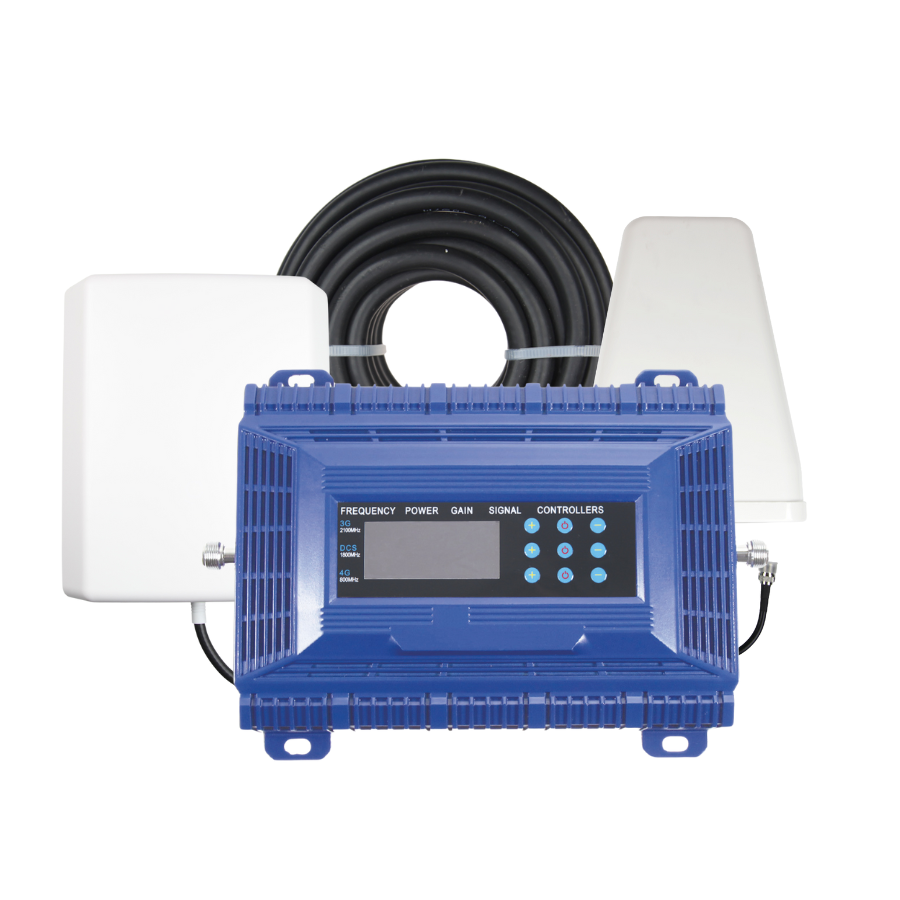
Unlike standalone antenna retailers, SmartBoosters supplies complete, engineered kits that include high-gain outdoor directional antennas, ultra-low-loss coaxial cabling, ICASA-approved high-gain power boosters, and indoor broadcast dome/panel antennas.
Step-by-Step: Selecting the Right Cell Booster System
When choosing a signal booster for your property, follow this standard installation process:
1.Measure Outdoor Signal Strength:Do not rely on phone ‘bars’ alone.
Check actual signal strength in dBm on your roof using your smartphone’s diagnostic mode (Field Test Mode on iOS or NetMonster on Android). A reading between -70 dBm and -90 dBm is ideal for a donor antenna site.
2.Determine Coverage Area Requirements:Select a booster scaled to your building’s size.
Match your floor space to the correct amplifier capacity. Small offices and homes require entry-level boosters (up to 300 m²), while multi-level commercial buildings need high-power commercial amplifiers with splitters and multiple indoor antennas.
3.Mount the Donor Antenna with Line of Sight:Point directly toward your network provider tower.
Position the exterior Yagi or Log-Periodic donor antenna high on your roof, orienting it directly toward the nearest Vodacom or MTN base station.
4.Establish Antenna Isolation & Power Up:Prevent signal feedback loop (oscillation).
Ensure adequate physical separation (vertical or horizontal distance) between the exterior donor antenna and the interior broadcast antenna. Connect the low-loss cabling to the SmartBoosters power unit and switch on the system.
Stop Wasting Money on Antennas—Upgrade to Real Signal Amplification
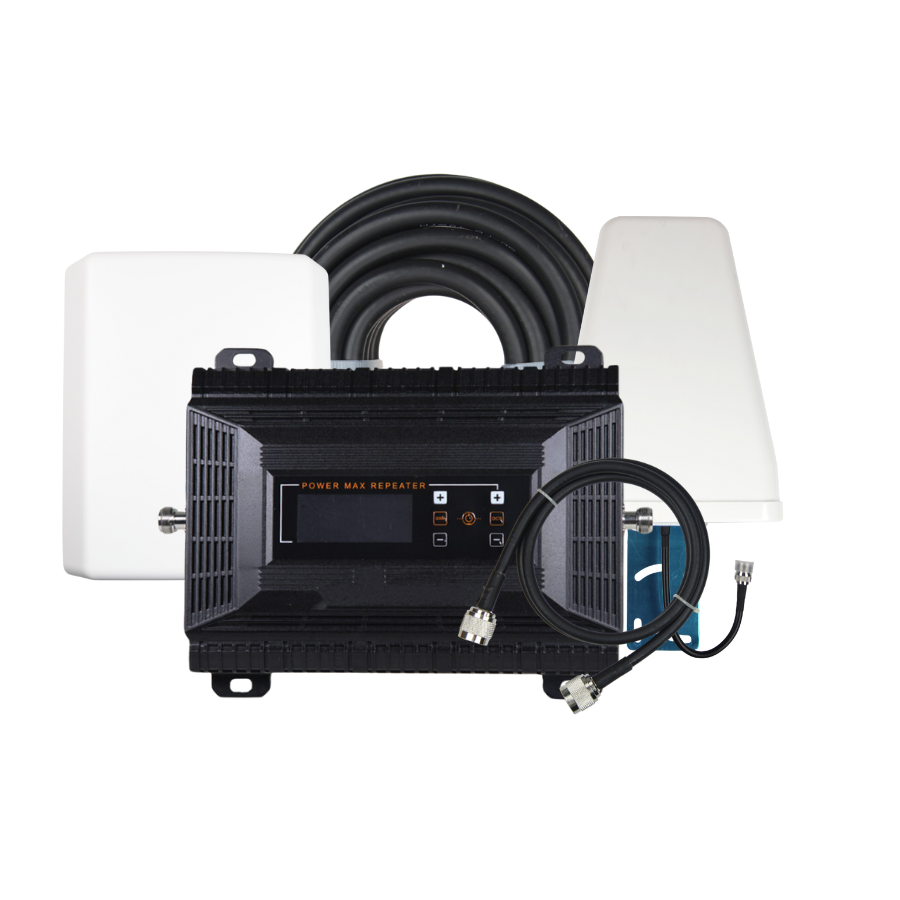
An antenna alone is only one-third of a complete signal solution. Without an active bi-directional power amplifier to multiply signal strength, a passive outdoor antenna will leave you stranded with dropped calls, buffering videos, and unreadable cellular internet.
Don’t let cheap antennas or expensive satellite subscriptions limit your connectivity. Invest in a permanent, high-performance SmartBoosters cell phone signal booster kit custom-engineered for South African homes, farms, and businesses.