




LTE 4G 5G Signal Booster vs Satellite Internet Options
An LTE 4G 5G Signal Booster is often the smarter and more cost-effective path to reliable connectivity. With all the hype surrounding Elon Musk’s Starlink satellite internet, it’s easy to think it’s the future of connectivity. And while the idea of fast internet from space sounds cool, Starlink isn’t the solution most people think it is — especially if you live in places like South Africa where better, cheaper alternatives already exist.
Here’s why you shouldn’t use Starlink — and what you should consider instead.
1. It’s Expensive — Way More Than It Should Be
Let’s start with the price:
•Hardware: Around R13,000–R15,000 just to get started.
•Monthly Fee: Around R1,100–R1,300 (even more for business use).
•Power Backup: Extra cost if you want to stay online during load shedding.
That’s a lot of money when fibre and mobile internet options start at under R500/month with no major upfront cost.
2. Weather and Trees = Bad Signal
Unlike fibre or an LTE 4G 5G Signal Booster, Starlink depends on a clear view of the sky. Trees, clouds, rain, buildings — all can block or weaken your signal.
If you live in a leafy suburb, a high-rise area, or anywhere with unstable weather, Starlink’s performance will suffer.
3. Load Shedding Makes It Even Worse
Starlink needs constant power — not just for the dish, but for the Wi-Fi router and modem too.
In a country like South Africa, where load shedding is a regular reality, this is a big problem unless you invest in:
•A UPS (battery backup)
•An inverter or solar setup
That’s another R5,000–R20,000 depending on your setup — just to keep your expensive internet on.
4. It’s Not Great for Gaming or Streaming
Starlink’s latency (or “lag”) is better than old-school satellite internet, but still higher than fibre or 5G. That means:
•Online gaming can be frustrating
•Zoom calls or Teams meetings might freeze or drop
•Streaming may buffer or drop quality during peak hours
5. Starlink Isn’t Even Officially Available in SA
At the time of writing, Starlink hasn’t launched officially in South Africa due to regulatory issues. That means:
•No local support
•No warranty
•No proper customer service
•You’re relying on grey-market resellers
If something goes wrong — good luck fixing it.
So What Should You Use Instead?
Here’s the good news: South Africa has solid internet options already, including:
•Fibre: Fast, stable, and affordable. Available in most towns and cities.
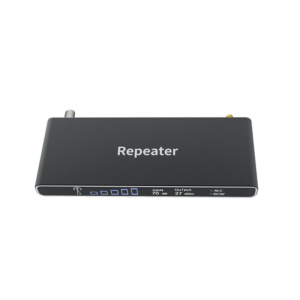
•LTE 4G 5G Signal Booster: Great for areas without fibre. Mobile routers work well even during load shedding.
•Wireless ISPs (WISPs): Ideal for farms and remote areas.
•Mobile SIM routers: Affordable and portable. Many offer unlimited plans.
. Mobile Phones Signal Boosters: Totally affordable and no monthly charge, it is also licensed and approved by Icasa and other regulatory bodies in The country
All of these have better support, lower costs, and smoother performance than Starlink — and they don’t require a dish on your roof.
Starlink sounds exciting — but for most people, it’s more expensive, less reliable, and more hassle than it’s worth.
Unless you live in a remote location with no fibre, no mobile coverage and here an LTE 4G 5G signal booster can really help resolve this issue, and no wireless ISPs, don’t use Starlink. You’ll get better value and performance elsewhere.
In the final analysis, the connectivity decision should be driven by total cost of ownership, performance reliability, regulatory certainty, and infrastructure fit — not hype cycles. While satellite-based access such as Starlink, backed by high-profile figures like Elon Musk, has captured global attention, the practical reality for most South African users points in a different direction. Proven terrestrial technologies — fibre broadband, licensed 5G and LTE networks, fixed wireless access, and carrier-approved cellular signal booster systems — consistently deliver stronger ROI, lower latency, and more predictable uptime.
For households, enterprises, mines, campuses, logistics hubs, and commercial properties, the smarter investment is in high-gain antenna systems, carrier-grade cell phone signal boosters, distributed antenna systems (DAS), and professionally engineered RF coverage solutions. These technologies directly address weak mobile signal, dropped calls, slow mobile data, and indoor coverage gaps — the real bottlenecks that affect productivity and revenue.
Modern mobile signal enhancement hardware is now cost-efficient, standards-compliant, and regulator-aligned through authorities such as ICASA. When deployed correctly, booster and antenna networks increase usable signal strength, improve call clarity, raise data throughput, and stabilize mission-critical communications without recurring satellite subscription premiums.
From a strategic standpoint, businesses and property owners should prioritize scalable network coverage infrastructure, approved signal repeater systems, multi-band boosters, and 5G-ready indoor coverage design. These assets increase property value, tenant satisfaction, workforce efficiency, and digital resilience — all measurable commercial outcomes.
The bottom line is straightforward: premium connectivity should be built on performance economics and engineering merit. For most users, advanced mobile coverage solutions and signal booster technologies outperform satellite alternatives on cost, supportability, and operational impact. Smart connectivity planning is not about what is most talked about — it is about what delivers measurable results.